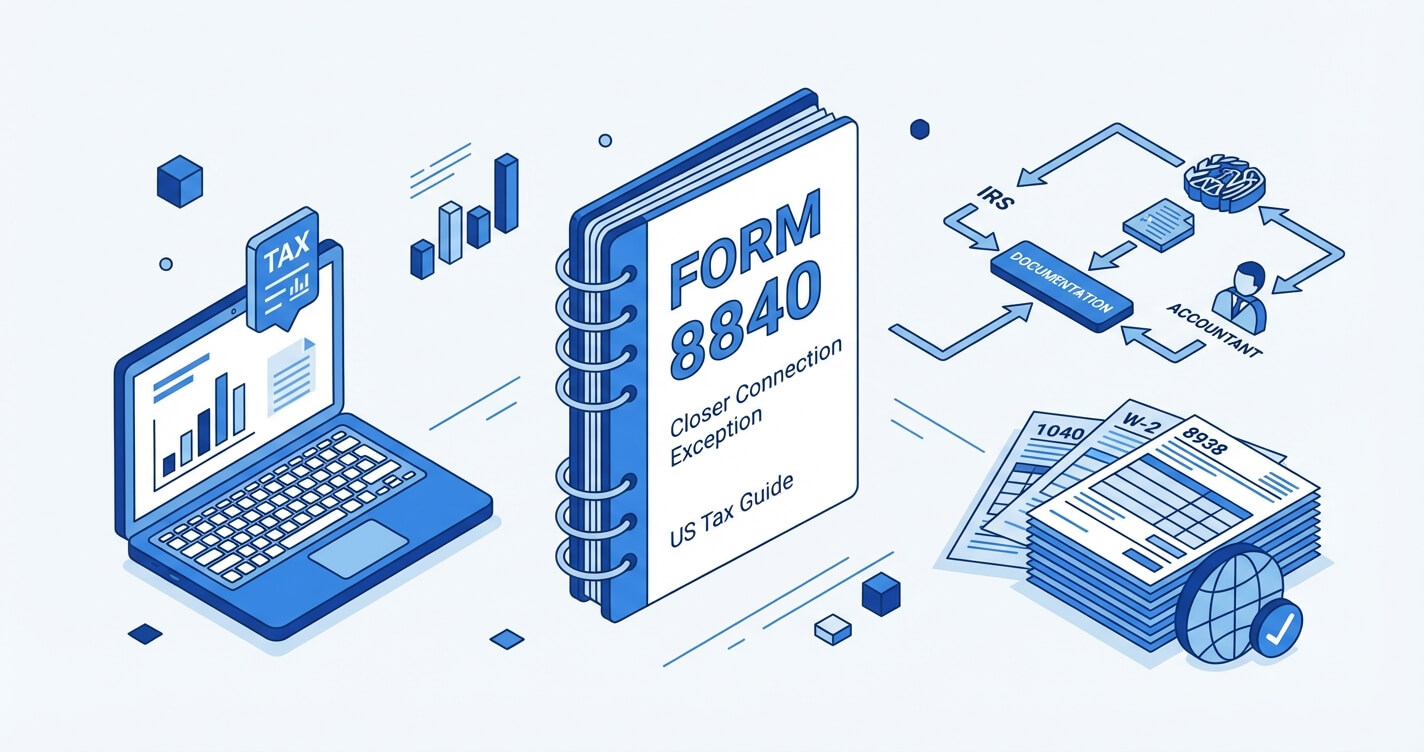
LLC Taxation Options for Indian Business Owners

Content
Contents

Key Takeaways

  • US LLCs have flexible, election-driven taxation; default classification applies unless Form 8832 or Form 2553 is filed.
  • A single-member LLC owned by an Indian resident is treated as a Disregarded Entity by default, requiring Form 1040-NR filings.
  • Multi-member LLCs default to partnership taxation with annual Form 1065 filings, even if no US tax is payable.
  • Form 8832 must generally be filed within 75 days of formation (or election date) to change default classification.
  • S-Corp elections are usually unavailable to Indian residents due to shareholder eligibility restrictions.
  • India–US DTAA relief, PE exposure, RBI ODI reporting, and transfer pricing must be evaluated alongside US tax elections.

Introduction: Why LLC Taxation Choices Matter for Indian Owners

For Indian CAs expanding into US tax advisory, LLCs are often the first entity structure your clients encounter. Indian founders running SaaS products, IT services, marketing agencies, or global consulting practices frequently incorporate US LLCs to access international clients and payment rails.

What many clients — and sometimes advisors — underestimate is that an LLC is not a tax status but a legal wrapper with multiple tax outcomes. The same LLC can be taxed as a disregarded entity, partnership, or corporation based entirely on elections.

For Indian residents, this decision is more complex. US tax exposure, India taxability, DTAA credit availability, RBI compliance, and GST positioning are all influenced by how the LLC is classified for US tax purposes.

This article equips Indian CAs with a practitioner-focused framework. We break down default LLC taxation, available elections, Form 8832 mechanics, and a comparative decision matrix — all with India–US interaction in mind — so you can confidently advise clients and structure compliant, scalable solutions.

How Are LLCs Taxed in the US?

LLC as a Pass-Through Entity

An LLC is not inherently a tax-paying entity under US federal law. By default, it is treated as a pass-through, meaning profits are taxed at the owner level rather than within the entity.

For Indian owners, this means US tax filings often arise even without US tax payable, purely due to reporting obligations.

Federal vs State Tax Treatment

LLC classification is determined at the federal level, but states may impose separate compliance burdens. Delaware, Wyoming, and California impose annual franchise taxes or fees regardless of income.

Practitioners must track both federal filings and state-level obligations to avoid penalties and loss of good standing.

Effectively Connected Income (ECI) for Indian Owners

For non-resident Indian members, US tax applies only if income is considered Effectively Connected Income (ECI) with a US trade or business.

Where operations, decision-making, and delivery occur from India, ECI analysis becomes central — and directly links to PE and transfer pricing positions.

Practitioner Tip: Always document where value creation occurs. This supports both ECI and PE defense.

Default LLC Classification Explained

Single-Member LLC as a Disregarded Entity

A single-member LLC owned by an Indian resident defaults to Disregarded Entity status. The LLC itself does not file an income tax return.

Instead, the owner files Form 1040-NR, along with relevant schedules, even if tax liability is nil.

Multi-Member LLC as a Partnership

Where there are two or more members, the LLC defaults to partnership taxation. The entity files Form 1065 and issues Schedule K-1 to each member.

Importantly, this filing is required even if all members are non-residents and no US tax is due.

Entity Classification Rules Under IRS Regulations

These default rules arise from IRS “check-the-box” regulations. Unless an election is filed, classification is automatic.

Refer to IRS guidance on LLC filing classifications for the authoritative framework.

Practitioner Tip: Many Indian founders believe “no US income means no US filing.” This is incorrect for partnerships.

LLC Tax Election Options: What Can You Choose?

Electing Corporate Taxation

An LLC may elect to be taxed as a corporation by filing Form 8832. This shifts taxation from pass-through to entity-level.

The LLC then files Form 1120, and distributions are treated separately.

Can an LLC Elect S-Corp Status?

Yes, technically. An LLC can elect S-Corp taxation by filing Form 2553 after (or alongside) corporate election.

However, shareholder eligibility rules apply strictly.

S-Corp Election Limitations for Indian Owners

S-Corp shareholders must be US citizens or resident aliens. Indian residents do not qualify.

As a result, S-Corp structures are usually relevant only when there is a US individual owner or US holding entity. For deeper compliance, see our Form 1120-S S corporation tax return guide.

Practitioner Tip: Avoid S-Corp discussions early unless US residency or restructuring is planned.

What Is Form 8832 and When Should You File It?

Purpose of Form 8832

Form 8832 allows an LLC to elect how it is classified for US federal tax purposes.

Without it, default rules apply automatically.

Entity Classification Election Timeline

The form must generally be filed within 75 days of formation or desired effective date. Retroactive elections are limited.

Late elections may be accepted only under specific relief provisions.

Common Mistakes Indian Founders Make

Confusing Form 8832 with Form 2553 is common. The former governs classification; the latter governs S-Corp status.

Refer to IRS Form 8832 entity classification election guidance to avoid errors.

Practitioner Tip: Always retain stamped copies and election acknowledgment for future audits.

Tax Comparison Across LLC Election Options (Decision Framework)

Disregarded Entity vs Partnership

CriteriaDisregarded EntityPartnership
US FilingForm 1040-NRForm 1065 + K-1
ComplexityLowMedium
India Tax MappingDirect incomeShare of profits

Partnership vs S-Corp (Theoretical for Indian Owners)

While S-Corps offer payroll tax efficiencies, these benefits are largely inaccessible to Indian residents.

For most Indian-owned LLCs, this comparison is academic.

When Corporate Taxation Makes Sense

Corporate taxation may work where profits are retained, IP is held in the US, or US investors are expected.

However, double taxation and India credit mismatches must be evaluated carefully.

Practitioner Tip: For early-stage Indian founders, default classification is often optimal.

India–US Tax Interaction and Compliance Considerations

India–US DTAA and Double Taxation Relief

Pass-through income may qualify for DTAA relief, but classification consistency is key.

Mismatch between US and India treatment can deny credits.

Permanent Establishment Risk

If management, development, or sales occur from India, PE exposure arises.

This directly affects ECI characterization.

RBI, GST, and Transfer Pricing Touchpoints

Indian residents owning foreign entities must comply with ODI reporting under FEMA.

Indian teams supporting US LLCs may trigger GST zero-rated export positions or domestic GST.

Transfer pricing documentation is critical where services or IP are cross-charged.

Practitioner Tip: Align US classification with India TP policy early.

Practical Takeaways for Indian CAs and US Tax Preparers

Choosing the Right LLC Tax Setup for Clients

Start with default classification and justify deviations. Document commercial rationale.

Map each structure to India tax and regulatory consequences.

Ongoing Filing and Form Management

Track Forms 1040-NR, 1065, 1120, and elections centrally.

Manual handling does not scale — systems and checklists do.

Conclusion

LLC taxation is not about optimizing US tax alone. For Indian-owned structures, it is a multi-jurisdictional decision with long-term compliance impact.

Indian CAs who understand default rules, election mechanics, and India–US interaction can deliver significantly higher value to global clients.

Building this capability requires structured frameworks, not ad-hoc advice — and positions your firm as a trusted cross-border advisor.

FAQs

Can an Indian resident own a US LLC?

Yes. There are no restrictions on Indian residents owning US LLCs. However, tax and reporting obligations arise in both countries.

Is Form 1040-NR required even if no US tax is due?

Often, yes. Filing obligations are based on activity and classification, not tax payable.

Can an Indian-owned LLC avoid US taxes completely?

Only if income is not ECI and no US trade or business exists. Documentation is critical.

Does S-Corp status reduce taxes for Indian founders?

No. Indian residents are not eligible S-Corp shareholders.

Is Form 8832 mandatory?

No. It is required only to change default classification.

What happens if Form 8832 is filed late?

The IRS may deny the election, causing unintended tax treatment.

Does partnership income flow directly to India tax returns?

Yes, subject to DTAA and foreign tax credit rules.

Are state taxes applicable even without income?

In many states, yes. Franchise taxes and fees apply regardless of profit.

How does RBI ODI reporting apply?

Indian residents must report foreign entity investments annually.

When is corporate taxation preferable?

Typically when profits are retained or US investors are involved.

Key Takeaways

  • US LLCs have flexible, election-driven taxation; default classification applies unless Form 8832 or Form 2553 is filed.
  • A single-member LLC owned by an Indian resident is treated as a Disregarded Entity by default, requiring Form 1040-NR filings.
  • Multi-member LLCs default to partnership taxation with annual Form 1065 filings, even if no US tax is payable.
  • Form 8832 must generally be filed within 75 days of formation (or election date) to change default classification.
  • S-Corp elections are usually unavailable to Indian residents due to shareholder eligibility restrictions.
  • India–US DTAA relief, PE exposure, RBI ODI reporting, and transfer pricing must be evaluated alongside US tax elections.

Introduction: Why LLC Taxation Choices Matter for Indian Owners

For Indian CAs expanding into US tax advisory, LLCs are often the first entity structure your clients encounter. Indian founders running SaaS products, IT services, marketing agencies, or global consulting practices frequently incorporate US LLCs to access international clients and payment rails.

What many clients — and sometimes advisors — underestimate is that an LLC is not a tax status but a legal wrapper with multiple tax outcomes. The same LLC can be taxed as a disregarded entity, partnership, or corporation based entirely on elections.

For Indian residents, this decision is more complex. US tax exposure, India taxability, DTAA credit availability, RBI compliance, and GST positioning are all influenced by how the LLC is classified for US tax purposes.

This article equips Indian CAs with a practitioner-focused framework. We break down default LLC taxation, available elections, Form 8832 mechanics, and a comparative decision matrix — all with India–US interaction in mind — so you can confidently advise clients and structure compliant, scalable solutions.

How Are LLCs Taxed in the US?

LLC as a Pass-Through Entity

An LLC is not inherently a tax-paying entity under US federal law. By default, it is treated as a pass-through, meaning profits are taxed at the owner level rather than within the entity.

For Indian owners, this means US tax filings often arise even without US tax payable, purely due to reporting obligations.

Federal vs State Tax Treatment

LLC classification is determined at the federal level, but states may impose separate compliance burdens. Delaware, Wyoming, and California impose annual franchise taxes or fees regardless of income.

Practitioners must track both federal filings and state-level obligations to avoid penalties and loss of good standing.

Effectively Connected Income (ECI) for Indian Owners

For non-resident Indian members, US tax applies only if income is considered Effectively Connected Income (ECI) with a US trade or business.

Where operations, decision-making, and delivery occur from India, ECI analysis becomes central — and directly links to PE and transfer pricing positions.

Practitioner Tip: Always document where value creation occurs. This supports both ECI and PE defense.

Default LLC Classification Explained

Single-Member LLC as a Disregarded Entity

A single-member LLC owned by an Indian resident defaults to Disregarded Entity status. The LLC itself does not file an income tax return.

Instead, the owner files Form 1040-NR, along with relevant schedules, even if tax liability is nil.

Multi-Member LLC as a Partnership

Where there are two or more members, the LLC defaults to partnership taxation. The entity files Form 1065 and issues Schedule K-1 to each member.

Importantly, this filing is required even if all members are non-residents and no US tax is due.

Entity Classification Rules Under IRS Regulations

These default rules arise from IRS “check-the-box” regulations. Unless an election is filed, classification is automatic.

Refer to IRS guidance on LLC filing classifications for the authoritative framework.

Practitioner Tip: Many Indian founders believe “no US income means no US filing.” This is incorrect for partnerships.

LLC Tax Election Options: What Can You Choose?

Electing Corporate Taxation

An LLC may elect to be taxed as a corporation by filing Form 8832. This shifts taxation from pass-through to entity-level.

The LLC then files Form 1120, and distributions are treated separately.

Can an LLC Elect S-Corp Status?

Yes, technically. An LLC can elect S-Corp taxation by filing Form 2553 after (or alongside) corporate election.

However, shareholder eligibility rules apply strictly.

S-Corp Election Limitations for Indian Owners

S-Corp shareholders must be US citizens or resident aliens. Indian residents do not qualify.

As a result, S-Corp structures are usually relevant only when there is a US individual owner or US holding entity. For deeper compliance, see our Form 1120-S S corporation tax return guide.

Practitioner Tip: Avoid S-Corp discussions early unless US residency or restructuring is planned.

What Is Form 8832 and When Should You File It?

Purpose of Form 8832

Form 8832 allows an LLC to elect how it is classified for US federal tax purposes.

Without it, default rules apply automatically.

Entity Classification Election Timeline

The form must generally be filed within 75 days of formation or desired effective date. Retroactive elections are limited.

Late elections may be accepted only under specific relief provisions.

Common Mistakes Indian Founders Make

Confusing Form 8832 with Form 2553 is common. The former governs classification; the latter governs S-Corp status.

Refer to IRS Form 8832 entity classification election guidance to avoid errors.

Practitioner Tip: Always retain stamped copies and election acknowledgment for future audits.

Tax Comparison Across LLC Election Options (Decision Framework)

Disregarded Entity vs Partnership

CriteriaDisregarded EntityPartnership
US FilingForm 1040-NRForm 1065 + K-1
ComplexityLowMedium
India Tax MappingDirect incomeShare of profits

Partnership vs S-Corp (Theoretical for Indian Owners)

While S-Corps offer payroll tax efficiencies, these benefits are largely inaccessible to Indian residents.

For most Indian-owned LLCs, this comparison is academic.

When Corporate Taxation Makes Sense

Corporate taxation may work where profits are retained, IP is held in the US, or US investors are expected.

However, double taxation and India credit mismatches must be evaluated carefully.

Practitioner Tip: For early-stage Indian founders, default classification is often optimal.

India–US Tax Interaction and Compliance Considerations

India–US DTAA and Double Taxation Relief

Pass-through income may qualify for DTAA relief, but classification consistency is key.

Mismatch between US and India treatment can deny credits.

Permanent Establishment Risk

If management, development, or sales occur from India, PE exposure arises.

This directly affects ECI characterization.

RBI, GST, and Transfer Pricing Touchpoints

Indian residents owning foreign entities must comply with ODI reporting under FEMA.

Indian teams supporting US LLCs may trigger GST zero-rated export positions or domestic GST.

Transfer pricing documentation is critical where services or IP are cross-charged.

Practitioner Tip: Align US classification with India TP policy early.

Practical Takeaways for Indian CAs and US Tax Preparers

Choosing the Right LLC Tax Setup for Clients

Start with default classification and justify deviations. Document commercial rationale.

Map each structure to India tax and regulatory consequences.

Ongoing Filing and Form Management

Track Forms 1040-NR, 1065, 1120, and elections centrally.

Manual handling does not scale — systems and checklists do.

Conclusion

LLC taxation is not about optimizing US tax alone. For Indian-owned structures, it is a multi-jurisdictional decision with long-term compliance impact.

Indian CAs who understand default rules, election mechanics, and India–US interaction can deliver significantly higher value to global clients.

Building this capability requires structured frameworks, not ad-hoc advice — and positions your firm as a trusted cross-border advisor.

FAQs

Can an Indian resident own a US LLC?

Yes. There are no restrictions on Indian residents owning US LLCs. However, tax and reporting obligations arise in both countries.

Is Form 1040-NR required even if no US tax is due?

Often, yes. Filing obligations are based on activity and classification, not tax payable.

Can an Indian-owned LLC avoid US taxes completely?

Only if income is not ECI and no US trade or business exists. Documentation is critical.

Does S-Corp status reduce taxes for Indian founders?

No. Indian residents are not eligible S-Corp shareholders.

Is Form 8832 mandatory?

No. It is required only to change default classification.

What happens if Form 8832 is filed late?

The IRS may deny the election, causing unintended tax treatment.

Does partnership income flow directly to India tax returns?

Yes, subject to DTAA and foreign tax credit rules.

Are state taxes applicable even without income?

In many states, yes. Franchise taxes and fees apply regardless of profit.

How does RBI ODI reporting apply?

Indian residents must report foreign entity investments annually.

When is corporate taxation preferable?

Typically when profits are retained or US investors are involved.
Latest from our blogs

Latest from our blogs

View All
]