
Key Takeaways
- FIRPTA requires buyers to withhold 15% of the gross amount realized when a foreign person sells US real estate.
- Withholding is based on sale price plus liabilities assumed, not on net capital gains.
- No withholding applies for residential sales of $300,000 or less if the buyer signs a residence affidavit.
- Forms 8288 and 8288-A must be filed within 20 days of the transfer date, or penalties apply.
- Joint ownership withholding is allocated by ownership percentage, with a 50% spousal presumption unless documentation shows otherwise.
- A Form 8288-B withholding certificate can reduce or eliminate FIRPTA withholding, but IRS processing often takes 90+ days.
Introduction
As more Indian Chartered Accountants expand into US tax compliance, FIRPTA withholding frequently becomes a stumbling block in cross-border real estate transactions. Indian-owned US properties, family-held investments, and entity structures often trigger FIRPTA obligations that buyers, escrow agents, and even US CPAs misunderstand.
This article is written for Indian CAs advising clients on US real estate disposals, not for end taxpayers. It explains how FIRPTA withholding on US real estate sales actually works, how the withholding is calculated, and where practitioners can reduce unnecessary cash blockage for clients.
You will learn how to identify a foreign seller, apply the correct withholding rate, compute the amount realized correctly (including liabilities), manage Form 8288 filings, and use withholding certificates strategically. Mastery of these rules positions Indian CAs to confidently coordinate with US escrow agents and deliver higher-value US tax services.
What Is FIRPTA and Why It Applies to Real Estate Sales
Definition and Purpose of FIRPTA
The Foreign Investment in Real Property Tax Act (FIRPTA) is a US tax law designed to ensure collection of US tax when foreign persons dispose of US real property interests. Instead of waiting for a tax return, the IRS mandates upfront withholding at the time of sale.
FIRPTA is not a separate tax. It functions as a tax prepayment mechanism against the seller’s eventual US income tax liability.
Who Qualifies as a Foreign Seller
A foreign seller includes any nonresident alien individual, foreign corporation, foreign partnership, or foreign trust. US citizenship or green card status removes FIRPTA applicability.
Importantly, US residency for FIRPTA purposes is determined under US tax law, not immigration intent.
What Is a US Real Property Interest (USRPI)
USRPI includes land, buildings, and improvements located in the US, as well as certain interests in US real property holding corporations. FIRPTA applies to both direct property sales and indirect dispositions.
The buyer becomes the withholding agent under FIRPTA rules and bears liability for failures. Refer to IRS guidance on FIRPTA withholding when evaluating scope.
Practitioner Tip: Always document the seller’s tax residency using a non-foreign affidavit or FIRPTA analysis memo before closing.
FIRPTA Withholding Rates and Thresholds
15% Standard FIRPTA Withholding
The default FIRPTA withholding rate is 15% of the amount realized. This applies to most sales of US real estate by foreign individuals and entities.
The rate applies regardless of whether the transaction results in a gain or loss.
10% Reduced Rate for Certain Residential Sales
A reduced 10% withholding applies when the property is sold for $1,000,000 or less and the buyer intends to use it as a residence.
The buyer must sign an affidavit confirming residential intent.
No Withholding for $300,000 Personal Residence Exception
If the sale price is $300,000 or less and the buyer will use the property as a residence, FIRPTA withholding does not apply.
Separately, a 21% withholding applies to foreign corporations distributing USRPI gains, reflecting corporate tax rates.
Practitioner Tip: Validate buyer affidavits carefully—incorrect reliance exposes buyers to IRS liability.
How FIRPTA Withholding Is Calculated (Unique Angle)
Amount Realized vs Net Gain
FIRPTA withholding is calculated on the gross amount realized, not on net capital gains. This is the most common practitioner error.
Even loss-making transactions trigger withholding unless a certificate is obtained.
Including Liabilities Assumed by Buyer
The amount realized includes cash paid, fair market value of property transferred, and liabilities assumed by the buyer.
If a buyer assumes or pays off a mortgage, that payoff increases the FIRPTA base.
Common mistake: Ignoring mortgage balances when computing withholding.
Joint Ownership and Allocation Rules
For jointly owned properties, FIRPTA withholding is allocated based on ownership percentages.
For spouses, the IRS presumes 50% ownership each unless documentation (deed or agreement) shows otherwise.
Only the foreign owner’s portion is subject to FIRPTA.
Practitioner Tip: Always review title documents early to avoid over-withholding on US-resident co-owners.
FIRPTA Reporting and Required IRS Forms
Form 8288: U.S. Withholding Tax Return for Dispositions
The buyer must file Form 8288 and remit FIRPTA withholding to the IRS.
This form reports transaction details and tax withheld.
Form 8288-A and IRS Acknowledgment
Form 8288-A is filed for each foreign seller. The IRS stamps and returns it as proof of withholding.
The seller later attaches it to their US tax return to claim credit.
Filing Deadlines and Penalties
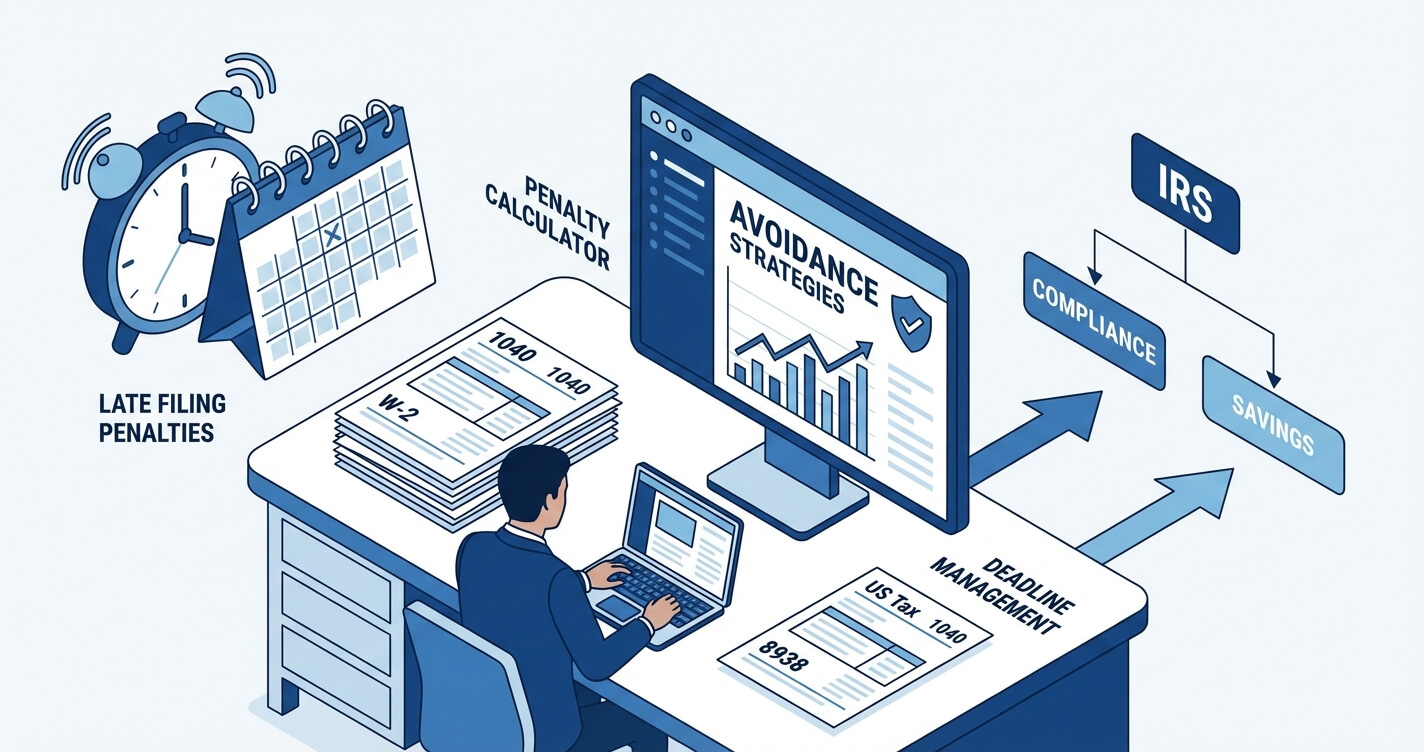
Forms and payment are due within 20 days of the transfer date.
Failure makes the buyer personally liable, with penalties and interest.
Practitioner Tip: Coordinate closely with escrow agents—many are unfamiliar with correct FIRPTA filing mechanics.
Withholding Certificates and How They Work
What Is a Withholding Certificate
A withholding certificate authorizes reduced or zero FIRPTA withholding when expected tax is lower.
It is issued by the IRS, not self-determined.
Form 8288-B Application Process
The application is filed using Form 8288-B, supported by transaction documents and tax computations.
Refer to Form 8288-B withholding certificate instructions for required disclosures.
Timelines and Practical Considerations
Applications should be filed before or within 20 days after closing.
IRS processing often takes 90 days or more. During this period, the buyer may withhold funds but delay remittance.
Practitioner Tip: Pre-closing filing avoids cash flow disputes and buyer resistance.
How to Reduce or Eliminate FIRPTA Withholding
Using a Withholding Certificate Based on Net Gain
If actual tax is lower than 15%, apply for reduced withholding based on net gain.
This is critical for high-basis or depreciated properties.
Non-Foreign Affidavit and Residency Exceptions
A valid non-foreign affidavit eliminates FIRPTA entirely if the seller is a US person.
Careful residency analysis is essential.
Tax Planning Strategies for Foreign Sellers
Entity structuring, timing of sale, and installment strategies can reduce over-withholding.
Ultimately, excess FIRPTA is recovered by filing a US tax return.
Conclusion
FIRPTA withholding on US real estate sales is one of the most operationally sensitive areas of US international tax compliance. For Indian CAs, understanding the calculation mechanics, ownership allocations, and withholding reduction tools is essential.
Practitioners who can guide buyers, escrow agents, and foreign sellers through Forms 8288, 8288-A, and 8288-B add immediate value. Building internal FIRPTA expertise strengthens your ability to deliver end-to-end US tax services with confidence.
The next step is standardizing FIRPTA checklists and timelines within your US tax workflows.
FAQs
Who is responsible for FIRPTA withholding—the buyer or seller?
The buyer is legally responsible for withholding and remitting FIRPTA tax to the IRS. If the buyer fails, the IRS can pursue them directly. Sellers remain liable for the final tax. This makes buyer education critical.
Is FIRPTA withholding based on capital gains?
No. FIRPTA is calculated on the gross amount realized. Net gains are relevant only when applying for a withholding certificate or filing the tax return.
Does FIRPTA apply if the property is sold at a loss?
Yes. FIRPTA applies regardless of profit or loss. A withholding certificate is needed to reduce or eliminate withholding.
How is FIRPTA handled for jointly owned property?
Withholding is allocated based on ownership percentages. For spouses, a 50% presumption applies unless proven otherwise. Only the foreign owner’s portion is subject.
Are mortgage payoffs included in FIRPTA calculations?
Yes. Liabilities assumed or paid by the buyer are included in the amount realized. Ignoring this leads to under-withholding.
Can FIRPTA withholding be refunded?
Yes. Excess withholding is claimed as a refund when the foreign seller files a US tax return. Processing can take several months.
What happens if Form 8288 is filed late?
Late filing triggers penalties and interest. The buyer remains personally liable until payment is made.
How long does Form 8288-B processing take?
IRS processing typically takes 90 days or longer. Early filing is strongly recommended.
Does FIRPTA apply to foreign corporations?
Yes. Foreign corporations are subject to FIRPTA, and a 21% withholding applies to USRPI gain distributions.
Should Indian CAs coordinate directly with US escrow agents?
Absolutely. Escrow agents often misunderstand FIRPTA. Proactive coordination prevents compliance failures and client disputes.